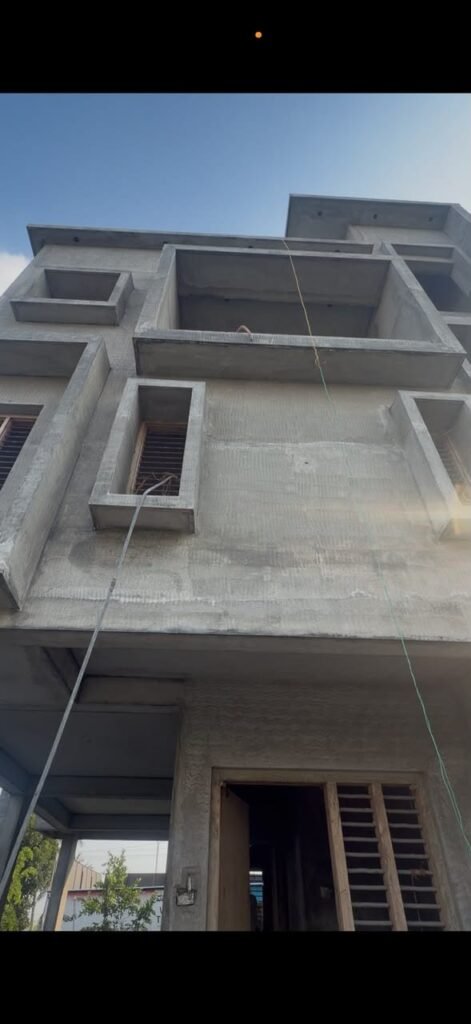
Seeing a crack or a damp patch in a house you have just built is worrying. Some cracks are harmless and expected; others are a sign of a real problem. Understanding the cause is the first step to the right fix.
Common causes of cracks
Shrinkage
Plaster and concrete shrink as they dry. Fine hairline cracks in plaster, especially in the first months, are usually shrinkage cracks. Rushed or inadequate curing makes them worse.
Joints between different materials
Where a brick or block wall meets a concrete column or beam, the two materials move differently. Without mesh or a groove at the junction, a straight crack often appears along the joint.
Temperature movement
Roof slabs and external walls expand and contract with heat. Long walls and exposed terraces without proper detailing can crack.
Foundation settlement
Diagonal cracks from the corners of doors and windows, cracks that widen over time, or doors that stop closing properly can indicate settlement. These need an engineer’s assessment.
Common causes of leakage
- Terrace: poor slope, blocked outlets or weak waterproofing.
- Bathrooms: waterproofing missed or damaged before tiling, gaps around pipes and floor traps.
- External walls: cracks in plaster, open joints around windows, or poor-quality exterior paint.
- Plumbing: leaking concealed joints, often found by damp patches near pipe routes.
- Sump and overhead tank: untreated walls letting water seep out.
Harmless or serious?
| Usually minor | Get it checked |
|---|---|
| Hairline cracks in plaster | Cracks wider than a coin’s edge |
| Straight cracks at wall–column joints | Diagonal cracks from door and window corners |
| Cracks that don’t grow | Cracks that keep widening |
| Cracks in columns, beams or slabs |
How cracks and leaks are prevented
- Proper curing of concrete and plaster
- Mesh at wall–column and wall–beam junctions before plastering
- Waterproofing tested by ponding before tiling
- Correct slopes and outlets on the terrace and balconies
- Pressure-testing plumbing before it is concealed
How they are repaired
Minor cracks are opened, filled with a suitable filler and repainted. Leaks are traced to their source first: patching the stain without fixing the cause only brings the damp back. Structural cracks need an engineer to diagnose the cause before any repair.
Help with cracks and leakage
We assess and repair cracks and leakage in homes across Chandra Layout, Vijayanagar, Kengeri and RR Nagar, as part of our home renovation work. See our repairs and renovation service or book an inspection.
