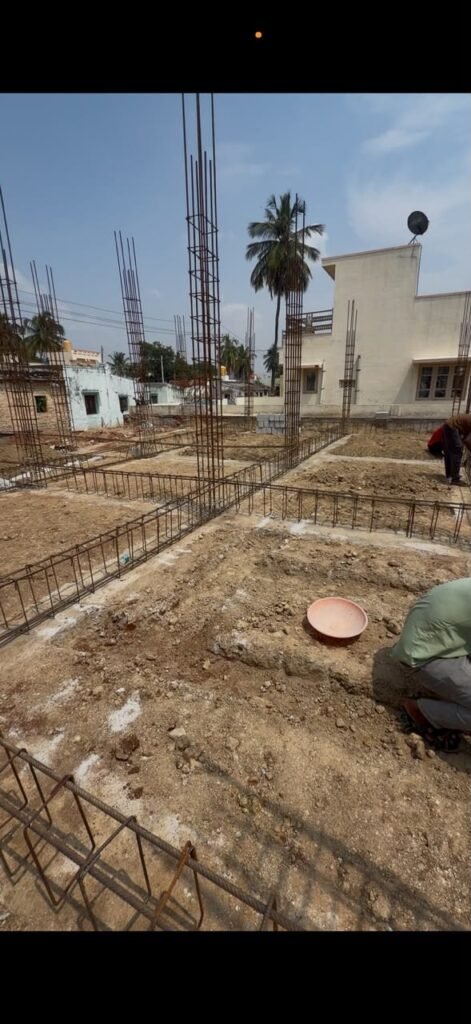
Reinforced cement concrete (RCC) is the skeleton of your house: footings, columns, beams and slabs. Once concrete is poured, mistakes in the steel or formwork are locked inside for good. That is why the hour before a pour matters more than almost any other moment in construction.
1. Formwork (shuttering)
- Shuttering is at the correct levels and sizes as per the drawing.
- Props are firm, straight and properly spaced, so nothing sags under the weight of wet concrete.
- Joints are tight, so cement slurry does not leak out.
- Surfaces are clean and oiled so the concrete releases cleanly.
2. Reinforcement
- Bar diameters, numbers and spacing match the structural drawing.
- Lap lengths and their positions follow the engineer’s details.
- Stirrups and rings are at the specified spacing, closer near joints where required.
- Bars are tied firmly and free of loose rust, mud and oil.
3. Cover blocks
Cover is the layer of concrete between the steel and the surface. It protects the steel from rust. Check that cover blocks of the right thickness are placed under and beside the bars, so no steel touches the shuttering.
4. Electrical and plumbing in the slab
- Conduits, fan boxes and light points are in their marked positions.
- Sleeves for pipes passing through slabs and beams are in place.
- Nothing cuts through main reinforcement without the engineer’s approval.
5. Concrete
- The concrete grade matches the design, and materials are measured, not guessed.
- Water is not added to make the mix easier to place; extra water weakens concrete.
- A slump test checks workability, and cube samples can be taken for strength testing.
- Vibrators are on site and working, to remove air pockets.
6. During and after the pour
- Pour continuously so cold joints don’t form in the wrong places.
- Vibrate properly, especially around joints and congested steel.
- Start curing as soon as the surface allows, and keep it moist for the specified period.
- Don’t remove props before the engineer’s recommended time.
Ask for a pre-pour inspection
A good contractor checks the formwork and reinforcement against the drawings before every pour, and is happy for you to see it. As a construction company in Nagarbhavi, Kengeri and West Bangalore, we follow this checklist on every slab. Learn about our civil engineering consulting or talk to our engineer.
